Research into new treatments for Koolen-de Vries syndrome
Researcher: Cristina Gontan, Erasmus MC Rotterdam
In people with Koolen-de Vries syndrome, one of the two KANSL1 genes does not work properly. Everyone normally has two copies of this gene, but in KdVS only one properly working copy remains. Researchers are therefore looking at a new treatment strategy: not replacing the missing gene, but stimulating the activity of the healthy copy that is still present. This may help reduce symptoms of the syndrome.
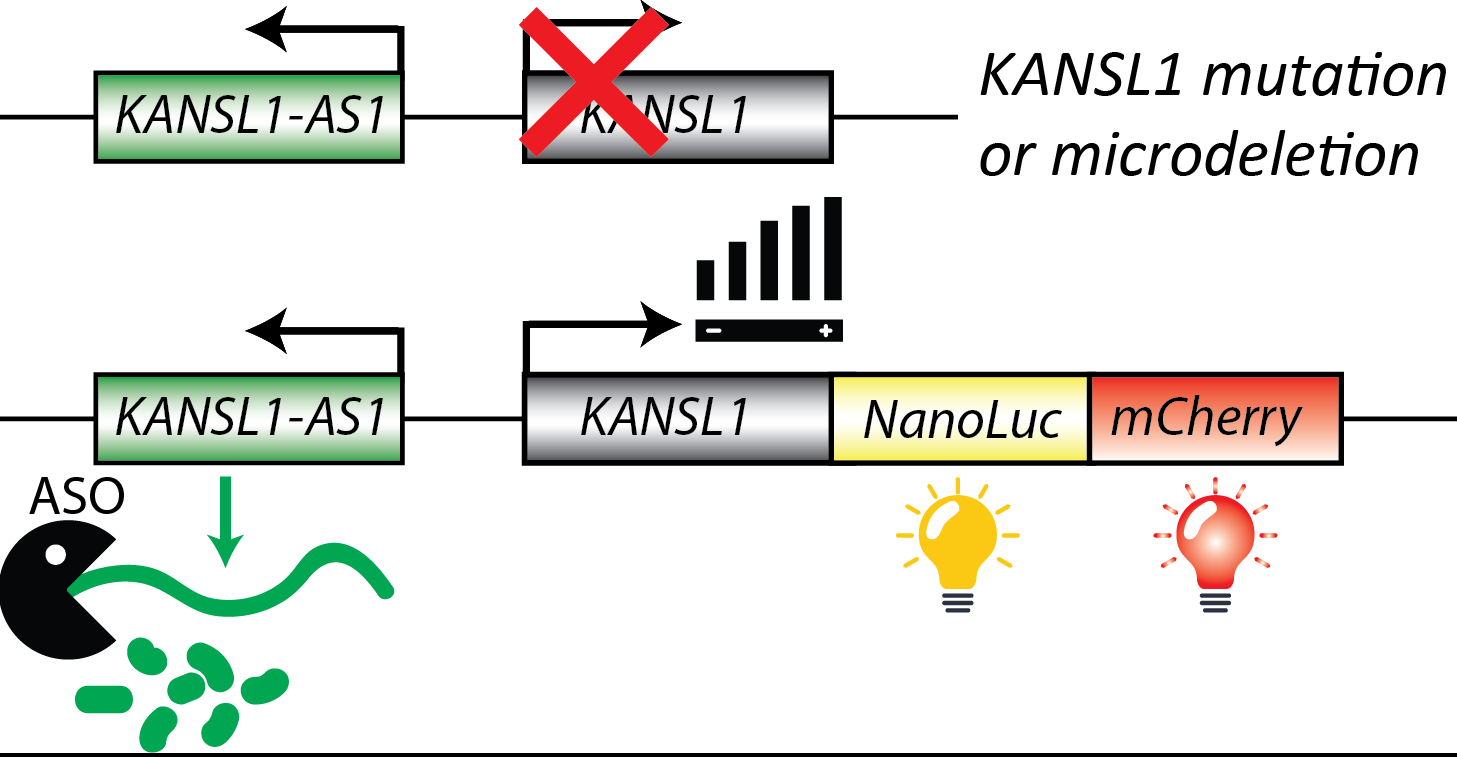
To investigate this, the research group has developed special human cell models using cells donated by people with KdVS. These cells can be grown in the laboratory and give researchers the opportunity to study the syndrome better in human cells. Small “light signals” have been built into these cells near the KANSL1 gene. When the gene becomes more active, this light signal increases. This allows researchers to measure very precisely whether a possible treatment makes the healthy KANSL1 gene work harder.
Next, several experimental treatments are tested, including so-called antisense oligonucleotides (ASOs). These are small pieces of genetic material that target RNA molecules that may inhibit the activity of the KANSL1 gene. By removing this inhibition, researchers hope to increase the activity of the healthy KANSL1 gene. In addition, these cells can be converted into human nerve cells (neurons). This is important because KdVS mainly affects the development and functioning of the brain. This allows possible treatments to be studied directly in human nerve cells that are relevant to the syndrome.
With these advanced cell models, researchers hope to develop new treatments that can increase the activity of the KANSL1 gene and may ultimately contribute to improvement of symptoms in people with KdVS.
Koolen-de Vries Natural history study
Researcher: Jolijn Verseput, Radboud UMC

From the clinical genetics department of Radboudumc, a natural history study has been set up for Koolen-de Vries syndrome. A natural history study has the aim of mapping the course of a condition. When do children start walking? Does epilepsy occur and until what age can it still arise?
The information can be used to show how the development, mental and physical health of people with this condition changes over time. Parents or other caregivers can request access to the natural history questionnaire via the HDGW webpage dedicated to Koolen de Vries syndrome. Each year they will be asked to update the information provided.
If interested in participation, you can find more information at: https://www.humandiseasegenes.nl/kansl1/parents/upload-clinical-information.
Koolen-de Vries facial recognition
Researcher: Jolijn Verseput, Radboud UMC
For better recognition and diagnostics of people with Koolen-de Vries syndrome (KdVS), the clinical genetics department of Radboudumc is working on (AI) models that can help diagnose the syndrome.
Based on 2D facial photographs and medical characteristics of people with KdVS, the AI tool PhenoScore has been developed. This tool can distinguish Koolen-de Vries syndrome from other syndromes with developmental problems. For people for whom there is doubt about whether KdVS is the correct diagnosis, the tool can therefore help determine how likely it is that someone indeed has KdVS.
In addition, Radboudumc is working with the University of Leuven to collect and analyse 3D photographs of people with KdVS to investigate whether this provides new or better information about the typical facial features of this syndrome.
Nadif Kasri lab
Researcher: Brooke Latour, Radboud UMC
Our brains need well-regulated DNA repair to develop and function normally. Small, temporary breaks in DNA are not always harmful — they actually help brain cells (neurons) to grow and make connections.
In some neurodevelopmental disorders, such as Koolen-de Vries syndrome (KdVS), this balance is disrupted. When DNA repair or replication does not proceed properly, brain cells cannot develop normally, leading to developmental problems.
Using brain organoids made from patient cells, our team in the Nadif Kasri lab (from genes to neuronal network; Nadif Kasri Lab – from genes to neuronal network) studies how DNA damage and repair influence early brain development, and what happens when these processes are disrupted. This research may yield new insights to protect brain development and develop targeted treatments for conditions such as KdVS.
Genes and behaviour in adults with Koolen – de Vries Syndrome
Researcher: C. Oldenboom, Dr. D. A. Koolen, Dr. P.A.M. Wingbermühle, Prof. dr. J.I.M. Egger
What does it mean to live as an adult with Koolen-de Vries syndrome? How does thinking develop, which feelings play a role and what does behaviour look like in daily life? These are questions that have received little research. Radboudumc and the Vincent van Gogh Top Clinical Centre for Neuropsychiatry have therefore started a joint study to map the neuropsychological functioning of adults with Koolen – de Vries syndrome.
What are we looking at in this study?
With this study we want to map the information processing processes (cognitive functioning), behavioural and emotional functioning of adults with Koolen – de Vries syndrome. There is currently little research on this. With this study we want to answer questions such as:
- What challenges can adults with Koolen – de Vries syndrome experience when processing information in daily life, for example with concentrating, planning and remembering?
- Which behavioural characteristics are common in adults with Koolen – de Vries syndrome?
- To what extent do adults with Koolen – de Vries syndrome experience feelings of anxiety or depression?
The results of this study can help provide more insight into the particularities that Koolen – de Vries syndrome can bring and can in the future be used to further improve the care and daily life of people with this syndrome.
What does the study look like?
During the study, several tasks will be administered that map cognitive functioning, in other words the way someone can process information. For example, puzzles are used to see whether participants can concentrate well, remember information and how good they are at making and following a plan. This visit takes about half a day, and can take place both at home and at one of the Vincent van Gogh locations (Nijmegen, Venray). In addition, a parent or loved one will be asked to complete several questionnaires about the behavioural and emotional functioning of the person with Koolen – de Vries syndrome. This takes 1 to 1.5 hours.
Are you interested in participating in this study?
You or the person you care for is eligible to participate in this study if you or he/she is older than 16 and has been diagnosed with Koolen – de Vries syndrome. Participation is completely voluntary, so you decide whether you want to take part.
Do you or the person you care for have questions about or interest in participation? We will be happy to send you an information leaflet about the study and explain further what participation involves. Together we can determine whether participation suits you or the person you care for. David Koolen, clinical geneticist at Radboudumc, is involved in the study and can also provide additional information about participation if desired.
For questions or interest, please contact carmenoldenboom@vigogroep.nl or david.koolen@radboudumc.nl. You can also contact the secretariat of the Vincent van Gogh Top Clinical Centre for Neuropsychiatry by telephone (0478 – 786160).
On behalf of the research team,
C. Oldenboom, MSc, PhD candidate Centre for Neuropsychiatry Vincent van Gogh
Dr. D. A. Koolen, clinical geneticist and senior researcher Radboudumc
Dr. P.A.M. Wingbermühle, clinical neuropsychologist and senior researcher Centre for Neuropsychiatry Vincent van Gogh
Prof. dr. J.I.M. Egger, professor of contextual neuropsychology and scientific head Vincent van Gogh